



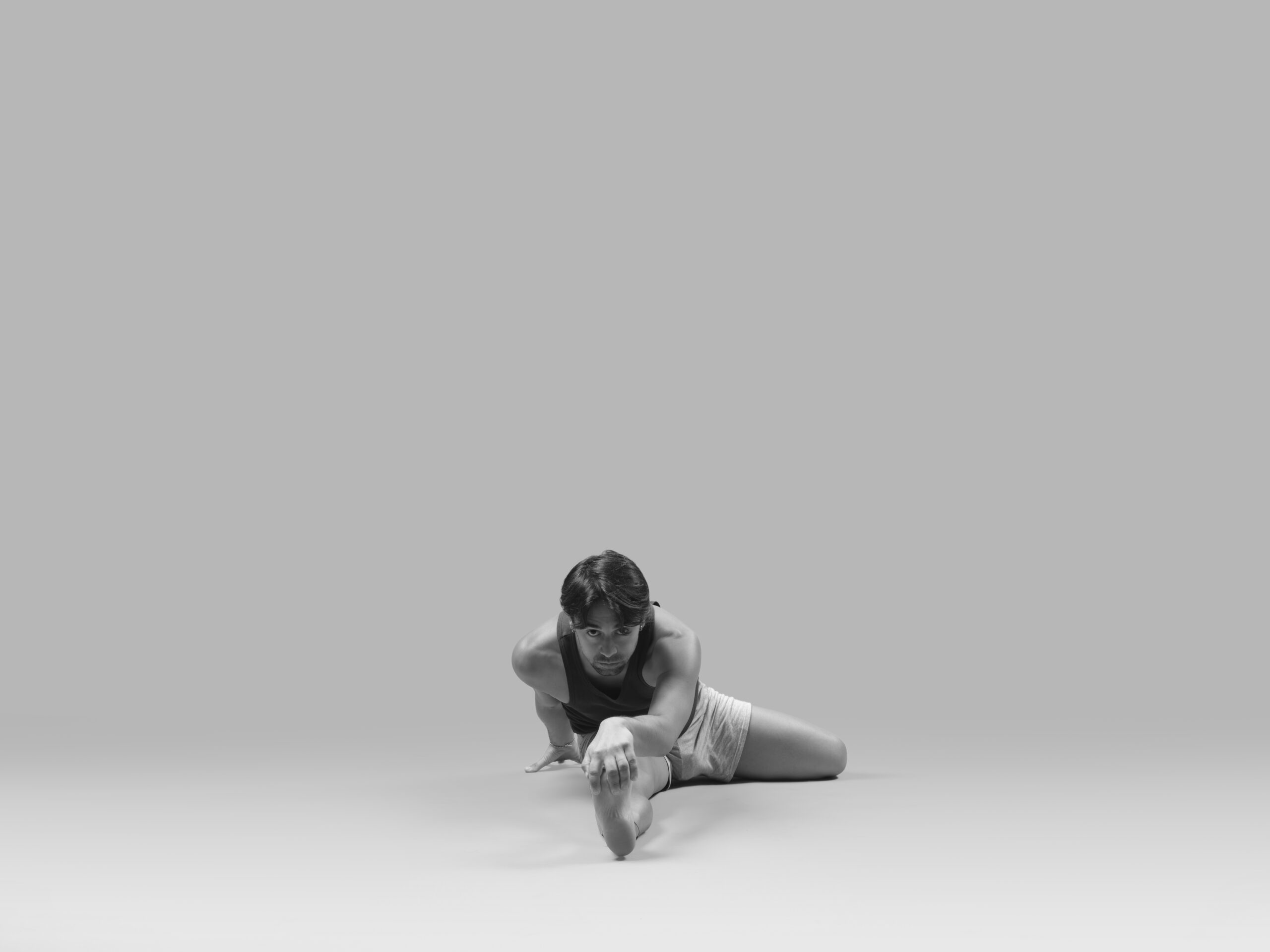
Stretching
When performed mindfully and without force, stretching is not merely an “addition” to yoga practice; it is one of the main tools for making it safe, progressive, and deeply regenerative.
Physically, stretching increases elasticity in muscles and tendons, improves joint mobility, and reduces the risk of strains. It allows smoother, more natural entry into advanced postures without forcing the joints. In connective tissues, collagen fibers glide better over each other, so each bending position requires less effort.
Many practitioners want to achieve advanced postures and risk forcing joint limits. Inserting a targeted stretching routine helps you gain range of motion gradually, so that when you try the complex pose you don’t have to force your joints: your body “slides in” you naturally.
Most yogic postures require extensive joint mobility: think of hip openings in warriors, extending the column in a cobra, or braiding the arms in a garuḍāsana. If the antagonist muscles remain shortened (stiff hip flexors, contracted posterior chain, pectoral muscles that pull), the body compensates by bending the knees, rotating the back, or compressing the joints. Regular stretching softens these “brakes” and allows you to enter the position with cleaner lines, distributing the load safely.
From a postural standpoint, it’s also a lifesaver for those who spend hours sitting at their desks: stretching the hip and upper back flexors counteracts the typical “C” closure of those who live in front of a laptop. Regularly stretching your calves and back chain provides some degree of ankle extensions and reduces compensations that, over time, turn into lower back or neck pain.
Then there is the effect on the nervous system. Maintaining a slow, controlled stretching position triggers the parasympathetic response: the breathing deepens, the heart rate drops, the mind lowers in volume. Many athletes integrate post‑workout stretching not only to loosen muscle bands, but to signal to the body that the “fight or flight” phase is over and recovery can begin. It’s no coincidence that stretching in the evening –perhaps accompanied by a couple of diaphragmatic breaths– promotes sleep more than shaking your phone in bed.
Finally there is a more subtle, psycho‑emotional benefit. Stopping, listening to the threshold of tension, breathing into an area of rigidity teaches patience. You find that progress comes not by pushing aggressively, but by staying present within the sensation and giving the muscle time to adapt. This “gradual education” ends up being reflected even off the mat: you become more capable of recognizing signs of overload –physical or mental– and intervening before they become pain.
In poche parole, lo stretching è l’arte di creare spazio: nelle fibre e nelle articolazioni.